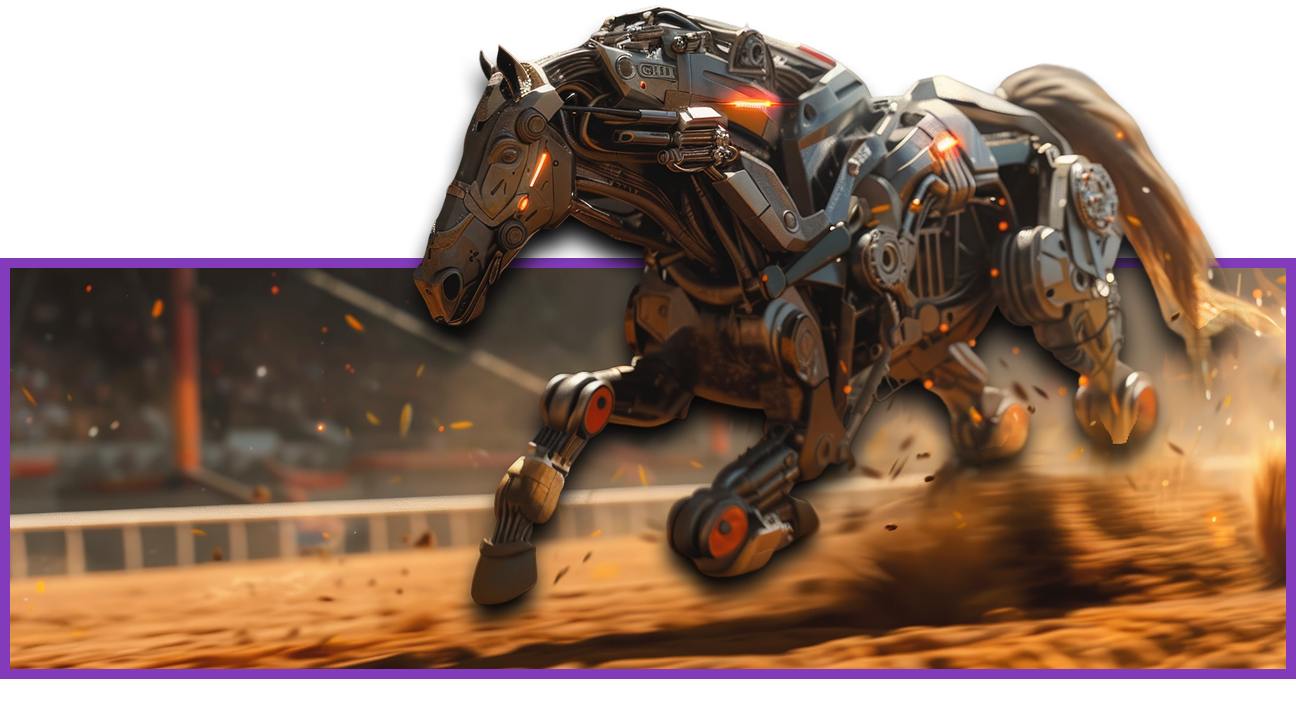
From Bullocks to F1. From
Legacy IT to ERP
/

ERP is a multi-pronged bullet. It kills more than process inefficiencies. It also slays many unnecessary, but long-running, wastages as well as delays that hold your business back Imagine a vehicle that is running on two wheels- both of a different size? How well would it move? How far would it go? How fast can it run?
The answer is a no-brainer. And yet, for many years, despite the arrival of ERP, many enterprises have kept moving on processes that work in isolation. Their business functions move without any knowledge of, or alignment with, other business functions. There are many wheels moving at their own axis, pace and routes. How far, and fast, would such an enterprise go? ERP is, thus, not an IT decision. It’s a business re-set shift. Embracing ERP helps an organisation in achieving many new strengths and capabilities. It arms the organisation and its business users to pack away all the weaknesses they were encumbered with.

Advantages of ERP

  1. Compact business processes with removal of redundancies
  2. Streamlined core business processes like HR, Finance and Supply Chains
  3. Tight integration of IT across the enterprise
  4. Orchestration of data running over many layers
  5. Taut synergy among building blocks straddling all processes
  6. Alignment of information at various levels
  7. Injection of collaboration in business functions
  8. Single-pane-views for all business users
  9. Removal of third-party dependencies
  10. Data-driven insights and real-time edge for decision-makers
  11. Cutting down costs, inefficiencies and latencies
  12. Compact business and IT readiness
  13. Scalability and flexibility for various business needs
  14. Information-driven agility

It is, thus, highly advisable for enterprises to morph from legacy and manual processes towards the world of digitalisation and automation. That’s not a choice anymore. It’s quickly turning into an imperative if an enterprise has to stay relevant and top-of-mind for its customers. The world is buzzing with hand-held devices, smartphones, swipe-away apps and digitalised comfort everywhere. AI and automation have redefined words like real-time and speed in an unprecedented manner. It is crucial that enterprises take the courage to upend what they were used to and move towards new realities.

Migrating to the ERP Paradigm

As they do so, they would need clarity and competence. It’s a path laden with many brave pivots, big shifts and intricate complexities. It will not be a switch-on and switch-off game. It’s a transformation to the core. That’s where the enterprise would need the wisdom, wherewithal and wrenches that an IT expert like Presence360 can equip it with. It would be able to plan and execute the entire ERP leap when it is packed with all these factors:

  • Process understanding and architecture knowledge
  • Comfort with all kinds of verticals and frameworks
  • Ability to create, run and maintain applications for various processes
  • Data control and management expertise
  • Process reconfiguration and execution capabilities
  • Dexterity with new-age tools and software environments
  • Fluency with AI, automation and analytics
  • Capability for all kinds of formats – from SaaS, Mobile ERP, Cloud-based ERP – to CRM, SCM etc.
  • The knack of changing cold data into actionable business information
  • Precise ability in designing IT from a business-user perspective
  • Data security and governance expertise
  • Integration and alignment of various processes
  • Creation of compact and tightly-knit processes
  • Breaking down business siloes
  • Enterprise-wide provisioning and visibility
  • Real-time observability and actionability

ERP is a huge change that involves more than changing the wheels. It is about changing the engine too. That iterates the need for picking an expert that brings a driver’s view and not a passenger’s view. You need someone who understands business. Because Presence360 is, itself, a scion of a $360 million conglomerate like SFL. And because it has been reinventing IT for a variety of business verticals. It has transformed retail, finance, manufacturing, public sector and many such organisations- with a proven and wide range of ERP expertise in many industries. Equipped with very advanced and future-looking capabilities of AI, Machine Learning and automation, Presence 360 helps enterprises to plan for tomorrow.

The ERP Age and Beyond

If you look at some reports, you would see that ERP is now a reality and not a novelty anymore. From $71.62 Billion in 2019, it is growing to hit about $114 Billion by 2030 (as per Mordor Intelligence). According to figures from Technavio, this market could increase by $37.66 billion at a CAGR of 10.7 per cent between 2024 and 2029 – and would be driven by increasing demand for operational efficiency and data-driven insights in businesses. This shift is happening because enterprises can do so much more when their processes wield a single system, with real-time data, better productivity, and streamlined-daily operations. They can gain from business speed, better time-to-market cycles, improved performance efficiency, low operating costs, accurate data and enhanced strategic planning capabilities. Their ability to adapt to market changes jumps up manifold. So does their strength in making decisions that are backed by real-time and accurate information. The world is already moving to a new axis. If you have been stuck in the rut, get up and get out. But first, change the wheels.

Frequently Asked Questions

ERP software is a business management solution that connects your finance, HR, inventory, sales, operations, and other processes into one system. Businesses need ERP to improve accuracy, reduce manual work, and get real-time visibility for faster decision-making.

The best ERP software company is one that understands your industry, offers customizable modules, provides reliable support, and ensures smooth implementation. Presence 360 is trusted because it delivers simple, fast, and scalable ERP solutions tailored to real business needs.

Choose an ERP based on:
  • Your industry requirements
  • Customization needs
  • Scalability
  • Ease of use
  • Support quality
  • Integration capability
  • Total ownership cost
A demo and consultation can help you decide faster.

ERP pricing varies based on the number of users, modules needed, implementation time, and support level. Small businesses may start with essential modules, while growing companies choose advanced workflows and automation.

ERP implementation usually takes 1-12 weeks, depending on business size, data migration, customization, and process complexity. A well-planned onboarding ensures faster go-live.

Common ERP modules include:
  • Finance & Accounting
  • HR & Payroll
  • Inventory & Warehouse
  • Sales & Purchase
  • Production/Manufacturing
  • Supply Chain & Logistics
  • CRM
  • Project Management
Presence 360 can customize modules as per your process flow.

Yes. Modern ERP systems like Presence 360 offer full customization so you can match workflows, roles, approvals, reports, and dashboards to your business.

Absolutely. SMBs gain the most value because ERP reduces manual work, avoids errors, improves productivity, and supports growth with fewer resources.

ERP systems use role-based access, encryption, activity logs, and secure data management to protect your business information. Regular updates and backups keep your data safe.

Yes. A good ERP software company provides API-based integrations for CRM, payment gateways, accounting tools, HR systems, and more.

Yes. Presence 360 provides end-to-end support, including training, onboarding, updates, and ongoing assistance to ensure smooth daily operations.

ERP gives real-time visibility into your business - sales, inventory, finance, HR, and operations. This helps you make faster, data-driven decisions with accurate reports and dashboards.

Industries that commonly use ERP include:
  • Manufacturing
  • Trading & Distribution
  • Retail
  • Services
  • Logistics
  • Construction
  • Healthcare
  • Education
Presence 360 adapts easily across industries.

Accounting software manages only financial entries. ERP manages every business process - finance, HR, inventory, sales, production, and more - giving a complete view of operations.

Yes, if you want to remove data duplication, manual entries, errors, and disconnected systems. ERP brings everything into one place for smoother, faster operations.

Still Have Questions?

Our team is here to help & answer all your question. We ensure a quick responce.